
Lifestyle
A Coffee Journal You Will Actually Use
Better brew notes connect a recipe to a clear observation and one next experiment. Keep the record small enough to use on an ordinary morning.
The cup you cannot quite repeat
A particularly enjoyable cup can be surprisingly difficult to reproduce. You remember that it tasted good, but not whether you changed the grinder setting, poured more slowly, or used a different amount of water. By the next morning, the practical details have merged with your usual routine.
A coffee journal gives that memory a few reliable anchors. Its purpose is not to turn breakfast into laboratory work or demand an elaborate flavor vocabulary. It is to preserve enough of the session that you can make a sensible comparison when the next cup tastes different.
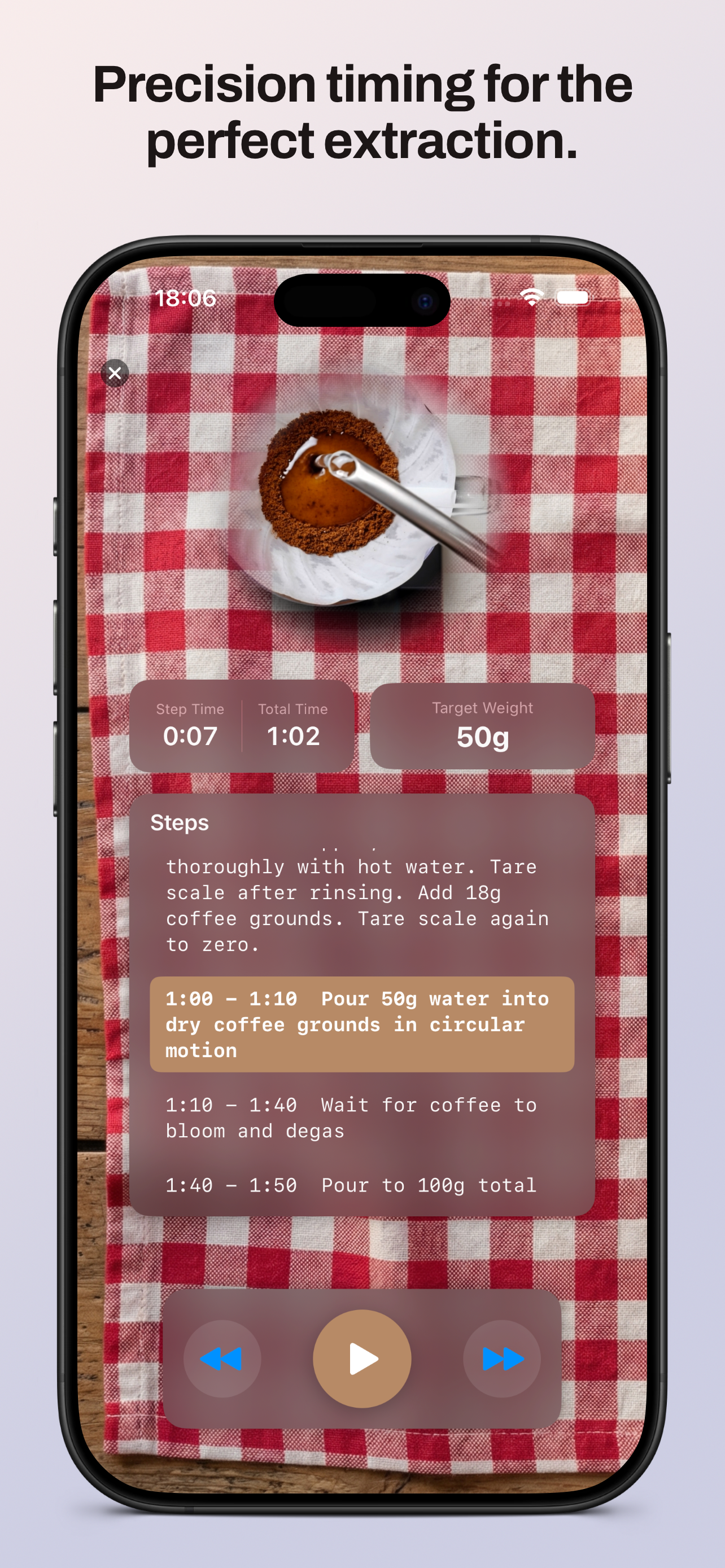
BrewGuide combines guided timing, custom profiles, and taste notes. Those features can support a small repeatable habit: follow a known sequence, record what actually happened, and choose one change for next time. The usefulness comes from the connection between those steps rather than the length of the entry.
Start with a recipe you can describe
Choose one familiar setup as a reference. Record the coffee, dripper, dose, water amount, and grinder setting you actually used. If you control water temperature, include it. A reference recipe gives the next entry something concrete to compare against without suggesting that the recipe is universally ideal.
A hypothetical record might read: the usual dripper, 18 grams of coffee, 288 grams of water, grinder setting 14. Those numbers simply describe a starting point. Another grinder's setting 14 will not mean the same thing, so the equipment context belongs with the number.
Keep the routine stable long enough to recognize it. Changing the beans, filter, dose, and pouring pattern together makes the resulting cup difficult to interpret. You can still enjoy that cup, but the note should acknowledge that it represents a new setup rather than a clean comparison.
Record the session that happened
A saved profile describes the plan. The journal should also capture any meaningful departure from it. Perhaps the final pour started late, the scale was reset accidentally, or you stopped before reaching the intended water amount. A short note can explain a difference that the recipe alone would hide.
This is where a guided timer helps: it makes the intended sequence easier to follow while your hands are occupied. It cannot measure everything you do or guarantee identical pours. The record still benefits from a plain observation such as paused midway to refill the kettle.
Do not rewrite a messy session into a tidy one. An imperfect brew can be useful evidence if the description is honest. If several things went wrong, mark it as an interrupted session and repeat the original recipe before drawing conclusions about a particular setting.
Use words that make sense to you
Taste notes do not need to imitate the language on a coffee bag. Start with what you can recognize: pleasantly sweet, too intense for me, thin when hot, or a dry finish I did not enjoy. Personal language is useful when it remains understandable a week later.
Describe liking separately from intensity. Strong is not a complete explanation of good or bad, and a cup can be intense in a way you enjoy. A note such as full-bodied but comfortable to drink gives your future self more direction than a single high or low rating.
Try the cup at a similar stage when comparing sessions, and note if your impression changes as it cools. You are building a practical record of your experience, not proving a chemical explanation from one sip. An observation can be precise without pretending to establish its cause.
Choose one next experiment
End the entry with one adjustment you want to try. For example, keep the coffee and water amounts the same and move the grinder one small step. Write that intention before the next brew so you do not improvise several changes and forget which question you were investigating.
One change does not isolate every variable in a home kitchen. Pouring, equipment, and the coffee itself may vary between sessions. It does make the comparison easier to reason about. If the result is promising, repeat it before deciding the adjustment deserves a permanent place in the profile.
A useful sequence might be reference recipe, one changed setting, then a repeat of that setting. Compare the notes for all three. If the two changed sessions disagree, keep the uncertainty visible instead of selecting the result that best fits the explanation you hoped to find.
Keep profiles readable as they evolve
Custom profiles are useful when their names explain why they exist. A name that includes the dripper and coffee or purpose is easier to revisit than best recipe version seven. Keep the note about what changed close to the recipe so a later comparison does not depend on memory.
In BrewGuide, the ability to create and edit profiles lets a successful experiment become a starting point for another session. Before replacing a reference recipe, preserve the earlier measurements in your notes if you still need them for comparison. Do not assume an edit creates a complete revision history.
Allow different coffees to have different starting points. A profile that suited the previous bag is a useful reference, but there is no requirement that it should suit every bag that follows. Recording the transition prevents a new coffee from looking like a mysterious failure of an old routine.
Keep the journal small enough for tomorrow
The minimum useful entry can fit in a few lines: recipe, departure from the plan, taste observation, and next adjustment. Add more detail only when it answers a real question. A record that takes less time to write is more likely to survive an ordinary busy morning.
Review a handful of recent entries when you feel stuck. Look for repeated observations and repeated interruptions before searching for a new recipe. If you already like the result, the next step can simply be to brew it again. Every session does not need to become an optimization exercise.
The payoff is modest and practical. A good cup becomes easier to describe, an unsuccessful experiment becomes easier to learn from, and tomorrow's choice has a reason behind it. BrewGuide supplies the sequence and a place for the record; your observations turn the routine into something you can revisit.